Two travellers can visit Amboseli in the same week, see the same elephants under the same Kilimanjaro backdrop, and come away with very different impressions of the stay — simply because one slept in a canvas tent and the other in a solid lodge room. The accommodation style shapes how the park feels between drives, and for most guests, those hours matter as much as the game drives themselves.
What the Terms Actually Mean
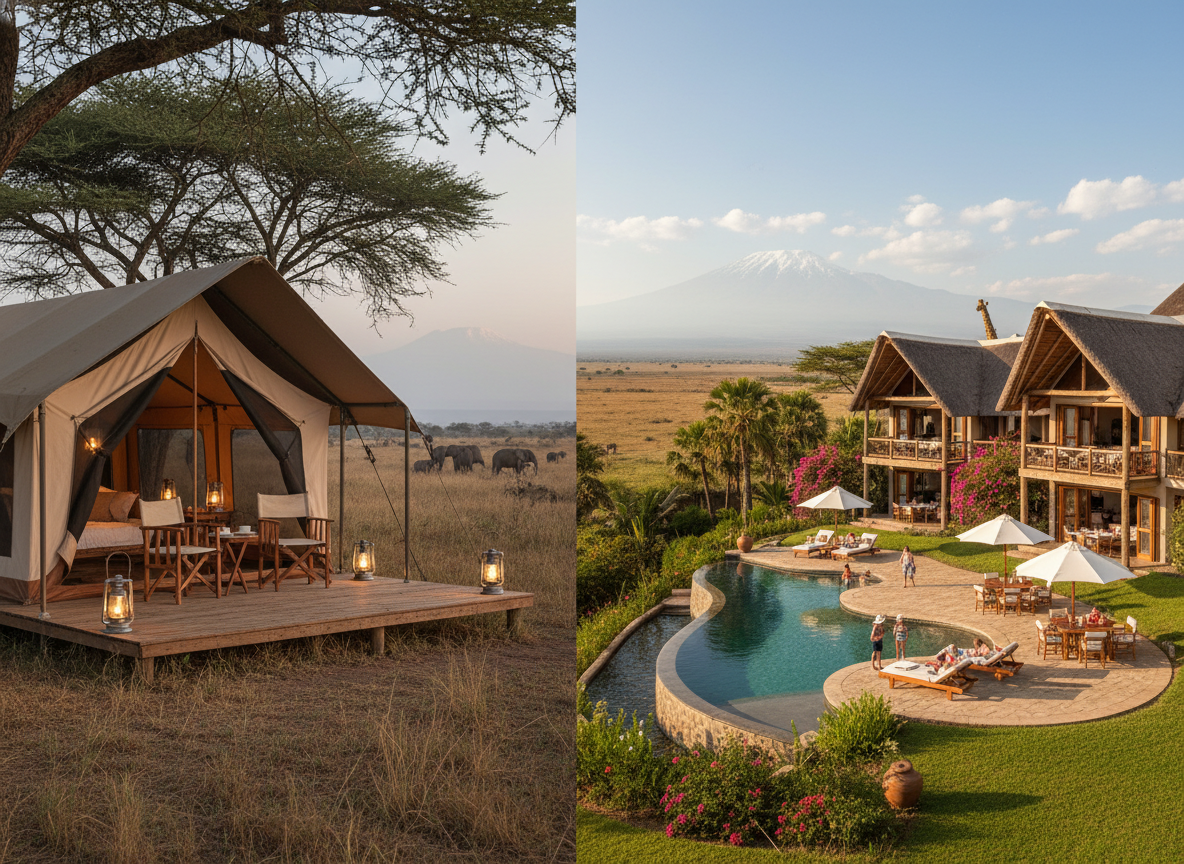
A tented camp in Amboseli is not an expeditionary camp in the outdoors-adventure sense. It is a permanent or semi-permanent canvas structure on a solid foundation — typically a raised wooden platform — with proper beds, an en-suite bathroom with hot water, and electricity within scheduled hours. The defining characteristic is canvas walls: you can hear through them.
The term covers enormous range. At the budget end, tented accommodation in Amboseli might mean simple canvas with basic facilities. At the luxury end — camps like Tortilis Camp, Tawi Lodge, or boutique properties in the Amboseli ecosystem’s community areas — tented means king-size beds, copper bathtubs, private decks with views, and the kind of service that outperforms most hotels.
A lodge in Amboseli is permanent construction: solid walls, a roof, glass windows, conventional hotel-style build. Lodges like Ol Tukai Lodge (80 chalet-style rooms) or Amboseli Serena Safari Lodge are established institutions in the Amboseli landscape, with facilities including swimming pools, larger dining rooms, and the kind of infrastructure that handles large group travel efficiently. The room is more enclosed, more insulated, and more predictable in comfort than a tent.
The Core Difference: What You Hear and Feel
The most consistent and significant difference between staying in a tent and a lodge in Amboseli is the sensory relationship with the environment.
In a canvas tent, the bush comes into the room at night. Elephant movements outside the camp boundary — the distinctive footfalls, the low stomach rumblings that elephants use to communicate — are audible. The first birds at dawn are louder. Rain, if it comes, sounds very different on canvas than on a roof.
For travellers who find this atmospheric and immersive, the tented experience defines what a safari should feel like. For travellers who find the ambient noise disruptive to sleep, or who have significant sensitivity to insects or temperature swings, a lodge’s solid construction and consistent environmental control is genuinely preferable rather than a compromise.
Neither reaction is wrong. They are honest responses to a real difference.
Amboseli-Specific Considerations
Several characteristics of the Amboseli environment make the tented versus lodge choice more specific than a generic safari comparison.
Dust: Amboseli is one of Kenya’s dustiest parks in the dry season. The volcanic soil and the constant movement of large animals creates a fine dust that coats everything. Canvas tents, which breathe, can collect more of this dust than solid rooms with sealing doors. If dust sensitivity is a concern — for respiratory reasons or simply comfort — lodge rooms are easier to seal against it.
Kilimanjaro cloud: Mornings on the Amboseli plain are frequently misty around the mountain, and overnight temperatures at 1,100 to 1,200 metres elevation can be noticeably cooler than travellers expect. Tented camps are typically designed for this with adequate bedding, but the canvas does not retain heat the way solid walls do. A lodge room is warmer on a cool Amboseli night.
Wildlife at camp: Some tented camps in Amboseli’s community areas and conservancy zones outside the park have wildlife moving through the camp itself — elephants and buffalo are not uncommon. This is part of the experience that tented camp guests often describe as the highlight of their stay. Lodge guests in the larger established lodges typically have more infrastructure between them and roaming wildlife.
Family Considerations
For families with children, the lodge tends to have logistical advantages. Larger rooms with interconnecting options, swimming pools for midday energy management, and the more predictable infrastructure of a built property make family management easier.
Lodges like Amboseli Serena and Ol Tukai have experience with family groups and have systems in place for them. Some tented camps actively welcome families; others have minimum age policies or physical layouts that make managing young children more demanding.
Teenagers on an adventure trip, however, often find tented camps more engaging precisely because they feel more like genuine bush camping. The distinction matters by the age and character of the children.
The Cost Range
Both tented camps and lodges exist across a wide price range in Amboseli. The assumption that tented equals budget and lodge equals luxury is wrong — the most expensive Amboseli properties are tented camps or have the design character of a tent despite solid construction, while some mid-range lodges are more affordable than boutique tent-camp experiences.
The most useful cost distinction in Amboseli is between: large established lodges with high guest capacity (which achieve economies of scale that keep per-night rates moderate), and small boutique tented camps with ten tents or fewer (which typically price at a premium because their guest count limits their ability to spread fixed costs).
Confirm what is included in the rate. Amboseli park fees are significant (currently around USD 70 per adult per day) and are sometimes included in accommodation packages and sometimes quoted separately.
Which to Choose
Choose a tented camp if: You want the classic safari atmosphere of canvas walls and night sounds; you are travelling as a couple looking for romance and intimacy; you prioritise smaller guest numbers and a more personal experience; you want to be in a camp that feels genuinely embedded in the bush rather than positioned near it.
Choose a lodge if: You are travelling with young children and need the facilities management that larger properties provide; you have any significant sensitivity to dust, insects, or temperature variation; you want a swimming pool as part of the stay; you are doing a one or two night Amboseli leg and want reliable, efficient facilities without variables.
For travellers who have not done a tented camp before, Amboseli is one of the most accessible places to try it — the ecosystem is well-managed, the camps are professional, and the canvas-wall experience of hearing the Amboseli plain at night is one that most first-timers find more rewarding than they expected.
If this guide has you ready to travel, a safari specialist can handle the route, camps, and logistics end to end.
Want to Book a Tour With Us?